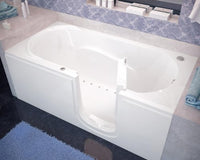
If you care for an aging parent, a spouse or a client who wants to stay at home, bathing is often the first daily task that becomes risky. Stepping over a high tub wall, standing on a wet surface and lowering into a bath are exactly the movements that lead to falls. A walk-in bathtub replaces those movements with a door, a built-in seat and a low step — so bathing can stay safe, comfortable and private.
This guide explains how walk-in tubs help with aging in place and in-home care, how to choose the right model for the person you care for, what they cost, and what insurance or other programs may help.
Why Walk-In Tubs Help People Stay at Home
Safer bathing
Bathrooms are one of the most common places for falls at home. Walk-in tubs are built to remove the riskiest moments of bathing:
- Low step-in threshold instead of a tall tub wall
- Built-in seat at chair height, so there's no lowering to the floor of the tub
- Textured, slip-resistant floor
- Grab bar and a door that seals watertight once closed
Easier for caregivers
Helping someone in and out of a standard tub is physically hard and a common cause of caregiver strain. With a seated, walk-in design, transfers are shorter and more controlled — and many people can bathe with little or no help.
Independence and dignity
Being able to bathe without help matters. Features like a heated seat, hydro or air massage jets and easy-reach controls also make bathing something to look forward to, which can help with stiff joints, circulation and relaxation.

Choosing the Right Walk-In Tub for the Person You Care For
For a wheelchair user: Wheelchair Transfer tub
The door swings outward and opens along the side, so the user can slide across from a wheelchair onto the seat without standing or stepping over a wall.
Shop the Ella Wheelchair Transfer 36"x55" Soaking Tub — $4,999 →
Shop the Ella Wheelchair Transfer 32"x52" with Air & Hydro Massage — $6,289 →

For balance problems or arthritis: Outward-swing door
An outward-swing door opens away from the tub, so there's no stepping around it inside. The Ella Capri pairs that door with air and hydro massage and a heated seat.
Shop the Ella Capri 30"x52" with Heated Seat — $6,515 →
For someone who still wants a full, reclined soak: Lay-down tub
A lay-down walk-in tub lets the user lie back like a regular bath, with a walk-in door for safe entry. A good choice when the person can still lower themselves with some help but wants a true soak.
Shop the Ella Laydown 32"x72" Hydro Massage — $5,037 →

For couples aging in place together: Two-seat tub
Two side-by-side seats let a couple bathe together, or give a caregiver room to assist.
Shop the Ella Tub4Two 32"x60" Two-Seat Tub — $8,302 →
For a small bathroom: Compact tub
At 26"x45", the Ella Mobile fits where a full-size tub won't.
Shop the Ella Mobile 26"x45" — $4,793 →
Compare all Ella's Bubbles walk-in tubs →
What Does a Walk-In Tub Cost?
At BathTubsPlus.com, Ella's walk-in tubs range from about $3,500 to $9,500 for the tub itself, depending on size and features (soaking only, hydro or air massage, heated seat, two seats). Installation is separate and depends on your plumbing, electrical, water heater and wall work. Buying the tub directly and hiring a local plumber or remodeler usually costs less than bundled in-home-sales pricing. We recommend getting two or three installation quotes.
Does Insurance or Medicare Cover a Walk-In Tub?
Coverage is limited, and rules vary by plan and state, so check before you buy. In general:
- Original Medicare generally does not cover walk-in tubs, because they are treated as home modifications rather than durable medical equipment.
- Medicare Advantage plans may offer a home-safety or supplemental benefit that can help with part of the cost. Ask your plan, and expect to need a doctor's statement that the tub is medically necessary.
- Medicaid waiver programs in some states help pay for home modifications that let older adults stay at home. Contact your state Medicaid office or your local Area Agency on Aging.
- Veterans may qualify for VA home modification grants, such as the Home Improvements and Structural Alterations (HISA) program, for medically necessary changes. Ask your VA care team about eligibility.
- Taxes: a walk-in tub recommended by a doctor may count as a deductible medical expense (see IRS Publication 502). Ask your tax professional.
Tip: before you order, ask the person's doctor or occupational therapist for a written recommendation. It's often required for any of the programs above.
Planning the Installation
- Measure the bathtub space, plus doorways and hallways for delivery.
- Check your water heater. Larger tubs need more hot water.
- Plan for electrical if you choose jets or a heated seat.
- Choose the door side (left or right) based on where the user will enter and where the drain is.
Most walk-in tubs install in a standard bathtub space, often without a major remodel.
Need Help Choosing?
Tell us who will use the tub, their mobility needs, your bathroom size and your budget, and we'll recommend the right model.
Call 518-952-1375 or email sales@bathtubsplus.com.